
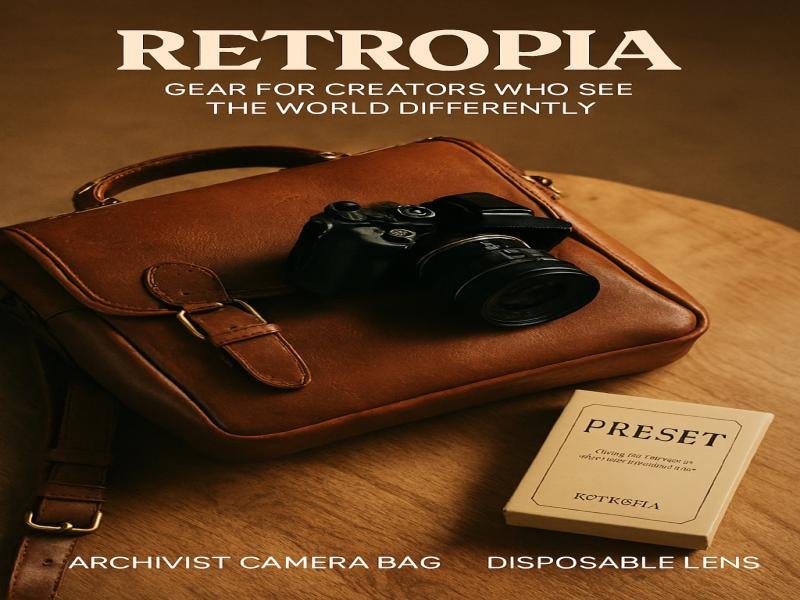
Retropia is a contemporary creative
brand operating within the visual culture and photography accessory space. The
brand presents a clear focus on retro inspired design combined with modern
usability. Its identity is shaped by a respect for classic aesthetics while
supporting the needs of present day creators. Retropia positions itself at the
intersection of nostalgia craftsmanship and functional design.
The evolution of photography has
created a renewed appreciation for analog inspired visuals. Many creators seek
texture warmth and character that reflect earlier eras of image making. Retropia exists within this cultural
movement by offering products that reference historical design while remaining
compatible with modern equipment. This balance defines the foundation of the
brand.

Retropia operates as a digital first
brand with a strong emphasis on visual storytelling. Its online presence
functions as the primary platform for showcasing products and communicating
brand values. The website is designed to highlight both form and function
through carefully structured layouts and imagery.
The brand philosophy of Retropia centers on creative
expression through visual tools. Products are designed to support
experimentation while maintaining reliability. This philosophy is reflected in
the selection of materials construction methods and overall product
presentation.
Retropia primarily focuses on
photography accessories that enhance creative output. These products include
camera related tools that emphasize tactile engagement and visual character.
Each product is positioned as a creative companion rather than a purely
technical device.
The aesthetic direction of Retropia draws inspiration from
vintage photography culture. This includes design cues from classic cameras
film era accessories and analog workflows. These influences are interpreted
through modern manufacturing techniques to ensure compatibility with current
technology.
Retropia presents a cohesive brand
identity across its product range. Visual consistency is achieved through color
selection material finishes and packaging design. This coherence strengthens
brand recognition and reinforces the connection to retro inspired themes.
In the current creative economy
photographers content creators and visual artists increasingly value
individuality. Retropia aligns with this shift by
offering products that allow users to differentiate their work. The brand
supports creative identity without imposing rigid stylistic boundaries.
The materials used in Retropia products are selected to
balance durability and aesthetic appeal. Textures finishes and weight are
considered as part of the overall user experience. This attention to detail
enhances both functional performance and tactile satisfaction.
Retropia products are designed to
integrate seamlessly into existing creative workflows. Compatibility with
popular camera systems and accessories ensures accessibility for a broad
audience. This practical consideration supports long term usability.
The brand emphasizes clarity in
product communication. Descriptions focus on purpose usage and design
inspiration. This approach allows users to understand how products fit into
their creative process.
Retropia exists within a highly
competitive market of photography accessories. Its differentiation lies in a
clear visual narrative and commitment to design authenticity. Rather than
focusing solely on technical specifications the brand highlights experiential
value.
The concept of nostalgia plays a
central role in Retropia identity. Nostalgia is not
presented as imitation but as reinterpretation. The brand draws emotional
resonance from the past while addressing present day creative needs.
Retropia also reflects broader
cultural trends that value slow creativity and intentional making. In an era of
rapid digital output many creators seek tools that encourage thoughtful
engagement. Retropia products support this mindset
through design and functionality.
The brand demonstrates an
understanding of how tools influence creative behavior. By offering accessories
that invite hands on interaction Retropia enhances the creative
experience beyond the final image.
Retropia visual language is
restrained and deliberate. Product photography emphasizes texture light and
composition. This visual approach aligns with the brand emphasis on
photographic heritage.
The digital presentation of Retropia products prioritizes ease of
navigation and visual clarity. This structure allows users to focus on product
details without distraction. The user experience reflects the brand values of
simplicity and intention.
Retropia maintains a consistent tone
across all brand communications. The language used is informative and composed.
This tone reinforces a professional image while remaining accessible.
The role of accessories in
photography extends beyond utility. Accessories shape how photographers
interact with their equipment. Retropia acknowledges this role by
designing products that enhance both function and enjoyment.
Retropia operates within a global
creative community. Its products are relevant to photographers across different
regions and styles. This broad relevance is achieved through universal design
principles rather than localized trends.
The brand approach supports
adaptability. Products are designed to suit various shooting environments
including studio urban and travel settings. This versatility expands their
practical application.
Retropia demonstrates awareness of
evolving technology without abandoning classic influence. Products are designed
to coexist with digital cameras mirrorless systems and modern workflows. This
integration ensures relevance as technology advances.
The packaging design of Retropia products reflects the same
design philosophy as the products themselves. Packaging is minimal and
purposeful. It supports protection presentation and brand consistency.
Retropia places importance on first
impressions. From unboxing to initial use the experience is curated to reflect
quality and intention. This attention contributes to overall brand perception.
The photography accessory market
includes both mass produced and boutique offerings. Retropia positions itself between
these extremes by combining accessibility with distinct design character.
The brand does not rely on excessive
ornamentation. Instead it emphasizes subtle details that reveal themselves
through use. This understated approach appeals to creators who value
refinement.
Retropia supports creative autonomy.
Products are tools rather than prescriptions. Users are free to interpret and
apply them according to their individual style.
The brand identity of Retropia is reinforced through
consistent storytelling. Product names visuals and descriptions align with the
retro creative theme. This alignment strengthens brand cohesion.
Retropia also reflects an
appreciation for craftsmanship. While products are manufactured using modern
methods the design language honors traditional making practices. This balance
creates a sense of authenticity.
The brand demonstrates sensitivity to
the emotional relationship between creators and their tools. Photography
equipment often carries personal significance. Retropia designs acknowledge this
connection.
Retropia positions its products as
long term creative companions. Durability and timeless design are emphasized to
support extended use. This approach contrasts with disposable trend driven
accessories.
The growing interest in film
photography and analog aesthetics has influenced many creative brands. Retropia engages with this interest
thoughtfully. Rather than replicating analog limitations the brand extracts
aesthetic values and adapts them.
Retropia products encourage
exploration of light texture and composition. By enhancing physical interaction
they invite photographers to slow down and engage more deeply with their craft.
The brand operates with an
understanding of visual culture history. Design references are intentional and
informed. This depth adds credibility and substance to the brand narrative.
Retropia maintains relevance by
focusing on foundational creative principles rather than fleeting trends.
Composition light and texture remain central to photography regardless of
technological shifts.
The brand presence online reflects
careful curation. Visual content is consistent in tone and quality. This
consistency reinforces trust and professionalism.
Retropia products are suitable for a
wide range of creative skill levels. Beginners and experienced photographers
alike can integrate them into their workflows. This inclusivity broadens the
brand appeal.
The brand avoids excessive technical
complexity. Products are designed to be intuitive. This simplicity supports
creative focus rather than technical distraction.
Retropia contributes to a broader
movement that values design led tools. In creative industries tools are
increasingly seen as extensions of personal expression. Retropia aligns with this
perspective.
The brand recognizes that photography
is both technical and emotional. Its products address this duality by combining
functional reliability with aesthetic resonance.
Retropia emphasizes longevity in both
design and relevance. Products are intended to remain visually appealing over
time. This timeless quality supports sustainable consumption.
The creative identity of Retropia is neither rigid nor
prescriptive. It provides a framework that users can interpret. This openness
fosters diverse creative outcomes.
The brand also benefits from a clear
and memorable name. Retropia evokes a sense of place and
time. This conceptual clarity strengthens brand positioning.
Retropia demonstrates that retro
inspiration can coexist with modern efficiency. Products do not sacrifice usability
for style. This balance defines the brand approach.
The photography community values
tools that feel personal. Retropia addresses this desire
through tactile materials and thoughtful design.
The brand avoids overstatement.
Communication remains measured and grounded. This restraint contributes to a
professional and credible image.
Retropia products function as bridges
between past and present. They connect historical aesthetics with contemporary
creative practice.
The company operates within a
creative ecosystem that values storytelling. Retropia contributes to this
ecosystem by providing tools that support narrative imagery.
The brand does not define creativity
narrowly. Its products are adaptable across genres including portrait landscape
street and experimental photography.
Retropia maintains focus on core
product categories rather than excessive diversification. This focus supports
quality control and brand clarity.
The brand identity remains stable
while allowing room for evolution. This balance ensures continuity without
stagnation.
Retropia reflects an understanding
that design influences how tools are perceived and used. By prioritizing design
the brand enhances creative engagement.
The role of nostalgia in creative
work is complex. Retropia approaches nostalgia as
inspiration rather than replication. This approach avoids pastiche.
The brand continues to align with
creators who value intention craftsmanship and individuality. Its products
support these values through form and function.
Retropia exists as part of a broader
conversation about the role of design in creative tools. Its presence
contributes meaningfully to this dialogue.
The brand demonstrates that
accessories can be both practical and expressive. This dual purpose defines its
contribution to the photography accessory space.
Retropia remains focused on enhancing
the creative journey rather than dominating it. Products are supportive
elements within a larger process.
The continued interest in tactile
creative tools suggests long term relevance for brands like Retropia . Its design philosophy
aligns with enduring creative values.
Retropia ultimately represents a
thoughtful approach to photography accessories. Its identity is grounded in
respect for visual history and commitment to modern creativity.